Printable tool
Elkonin Box Worksheet Generator
Generate printable sound box worksheets for segmenting CVC, CCVC, and CVCC words. Choose whether children see the word or segment from your oral prompt.
Create an Elkonin box worksheet
Choose a vowel focus, sound count, and whether words should appear as a reference. Then print a clean sound box page for phonemic awareness, spelling, or small-group reading practice.
Worksheet preview
Generate an Elkonin box worksheet to preview the printable page. The printed version will show only the sound boxes page.
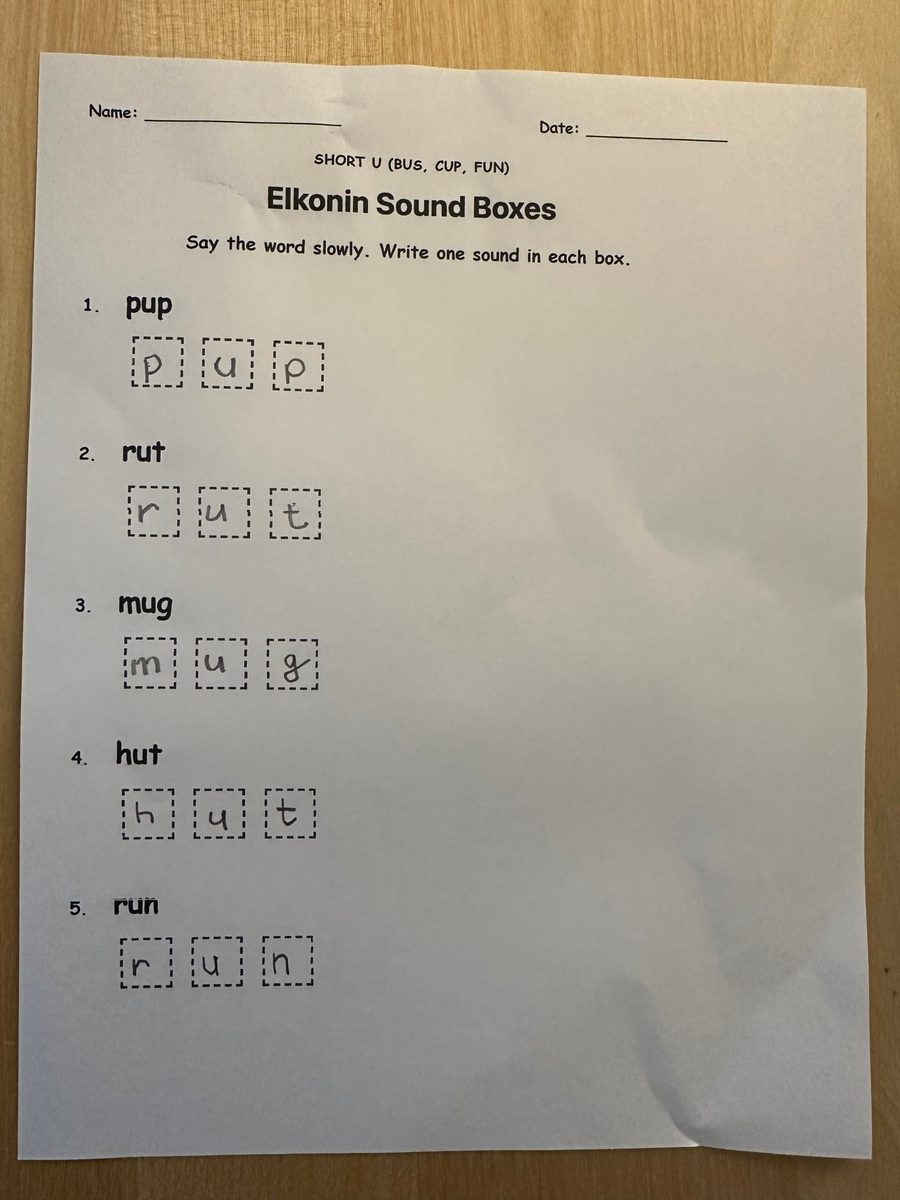
A real page from this generator
This is a Short U page with the words shown, printed at home and filled in by my child. Each box holds one sound, written left to right.
Mariam K., creator of Little Decoders
How to Use Elkonin Sound Boxes
Elkonin sound boxes give children a clear place to put each sound they hear in a word. To begin, choose a short vowel pattern and decide whether the child should see the printed word. If the word is hidden, the teacher, tutor, or parent says the word aloud first. The child repeats the word, stretches it slowly, and moves from left to right as each sound is pushed into a box with a counter, fingertip, or written letter.
For early kindergarten practice, start with three-sound CVC words such as cat, map, sit, or hop. Say the word naturally, then model how to segment it: /c/ /a/ /t/. The child can push a small counter into each box before writing letters. This keeps the first attempt focused on listening, which is especially helpful for children who want to guess from the first letter or copy without hearing the middle vowel.
When a child can segment CVC words with confidence, move to four-sound words such as clap, lamp, stop, or jump. These words require the child to hear a beginning blend or ending blend as two separate sounds. Adults should listen carefully and prompt with questions like “What sound comes right after /s/?” or “What is the last sound your mouth makes?” Keep the tone calm and corrective.
Use the show-word option when the lesson goal is mapping sounds to print. Hide the word when the goal is oral phonemic awareness. Either way, reread the word after the boxes are filled so children connect careful sound work back to real reading.
How Sound Boxes Represent Spoken Sounds
Sound boxes ask children to segment a spoken word into individual phonemes. Each box gives one phoneme a visible position, and letters can be added when the lesson moves from oral segmentation to spelling. The left-to-right layout also keeps each sound position visible during the activity.
After oral segmentation, letters can be added to connect the heard phonemes with their spellings. For example, after segmenting /m/ /a/ /p/, the child can connect those phonemes with the letters m, a, and p when the lesson moves from oral sound work to spelling. Sound boxes are not a whole reading lesson by themselves, but they provide a visible space for each sound during segmentation and sound-to-spelling practice.
One Box Represents One Phoneme
Count spoken sounds, not printed letters. Let the child push counters into the boxes before adding letters so listening remains the first task. A digraph such as sh represents one sound and belongs in one box, while a blend contains two sounds and needs two. A child's box response can give the adult a useful clue about what to review next—spoken segmentation, a sound-spelling connection, or the task directions—but one response does not establish the cause of an error.
FAQ
What are Elkonin boxes?
Elkonin boxes are sound boxes. A child says a word slowly and uses one box for each sound in the word.
What age are Elkonin boxes for?
They are commonly used in preschool, kindergarten, first grade, and reading intervention when children are learning to hear and map individual sounds.
How many sounds should I start with?
Start with three-sound CVC words if the child is new to segmenting. Move to four-sound words after the child can hear beginning, middle, and ending sounds reliably.
Should I show the word or hide it?
Show the word when you want children to connect sounds to letters. Hide the word when you want oral practice and the adult will say each word aloud.
Can I use these for reading intervention?
Yes. A sound-box response can show which sound position was omitted or combined during that attempt. Use the observation to choose a review prompt without assuming it establishes why the error occurred.